

Building a SaaS product from scratch is both an art and a science. It combines technical expertise, strategic planning, market research, and continuous iteration. A successful SaaS platform must address real customer problems, be scalable, maintainable, and secure. This comprehensive guide will walk you through every step, from ideation to scaling, providing actionable insights and best practices for startups, developers, and entrepreneurs.
1. Idea Validation & Market Research
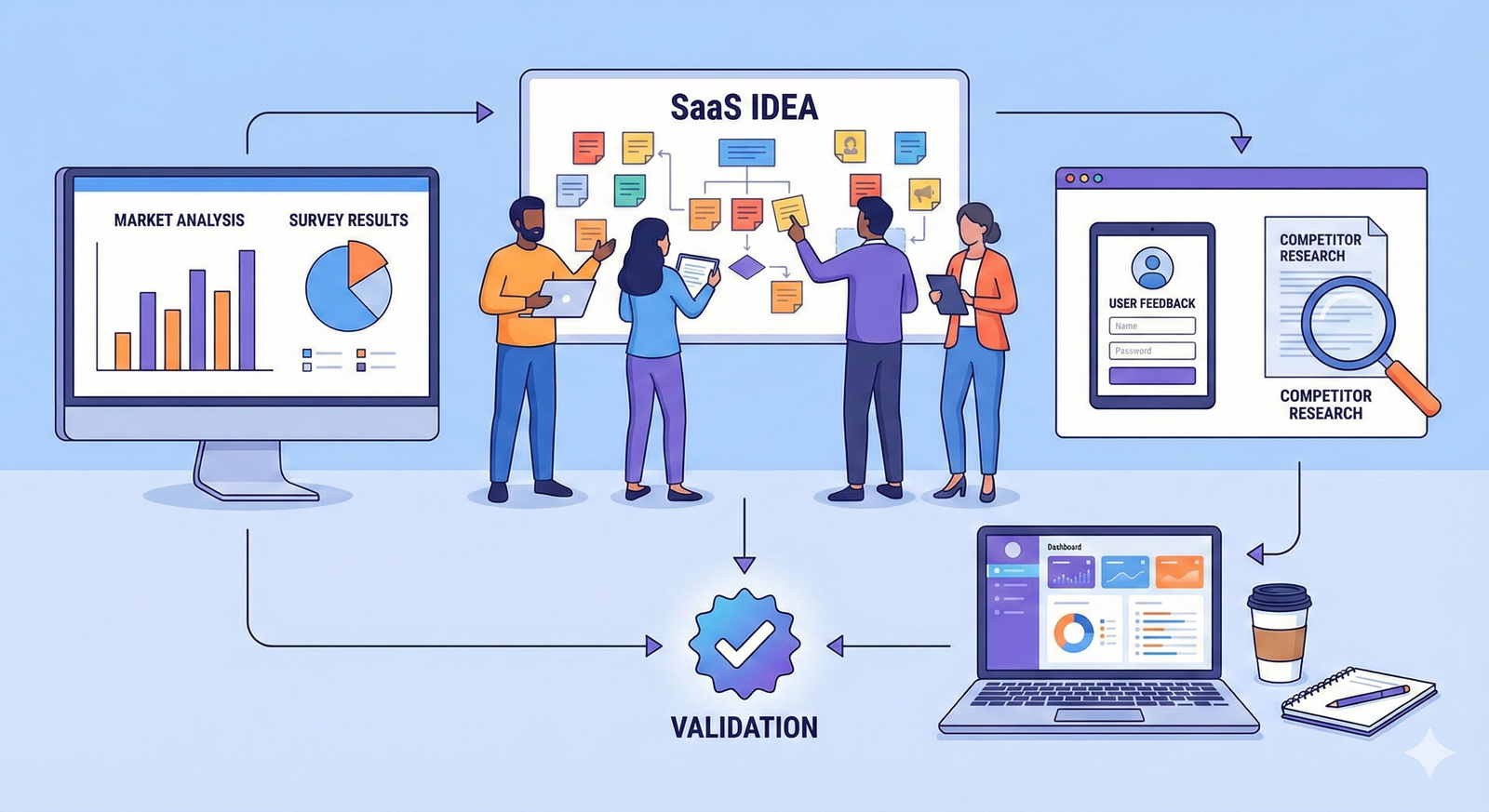
The foundation of a successful SaaS product is a validated idea. Start by identifying your target audience and understanding their pain points. Conduct surveys, interviews, and market research to gather both qualitative and quantitative data. Analyze competitors to identify gaps and opportunities. Create detailed user personas and map out customer journeys. Determine the unique value proposition (UVP) that sets your product apart. Remember, a well-validated SaaS idea reduces the risk of wasted time and investment.
2. Defining Features & MVP
Once your idea is validated, define the core features of your SaaS product. Prioritize essential functionalities that solve the main problem efficiently. Build a Minimum Viable Product (MVP) to test assumptions quickly with real users. Focus on simplicity, usability, and speed. Collect feedback early to iterate and refine features before expanding into a full product. An MVP approach helps reduce costs and accelerates market entry.
3. Architecture & Tech Stack
Choosing the right architecture is critical for scalability and maintainability. Consider modular or microservices architectures to separate functionalities into independent, reusable components. For the frontend, frameworks like React or Next.js enable fast, responsive interfaces. Backend options like Node.js, Django, or FastAPI provide robust APIs and data management. Containerization with Docker ensures consistent deployment across environments. Cloud platforms like AWS, Google Cloud, or managed VPS solutions offer scalability, high availability, and redundancy. Incorporate caching (Redis), database optimization (PostgreSQL), and monitoring tools to maintain performance as your user base grows.
4. Development & Automation
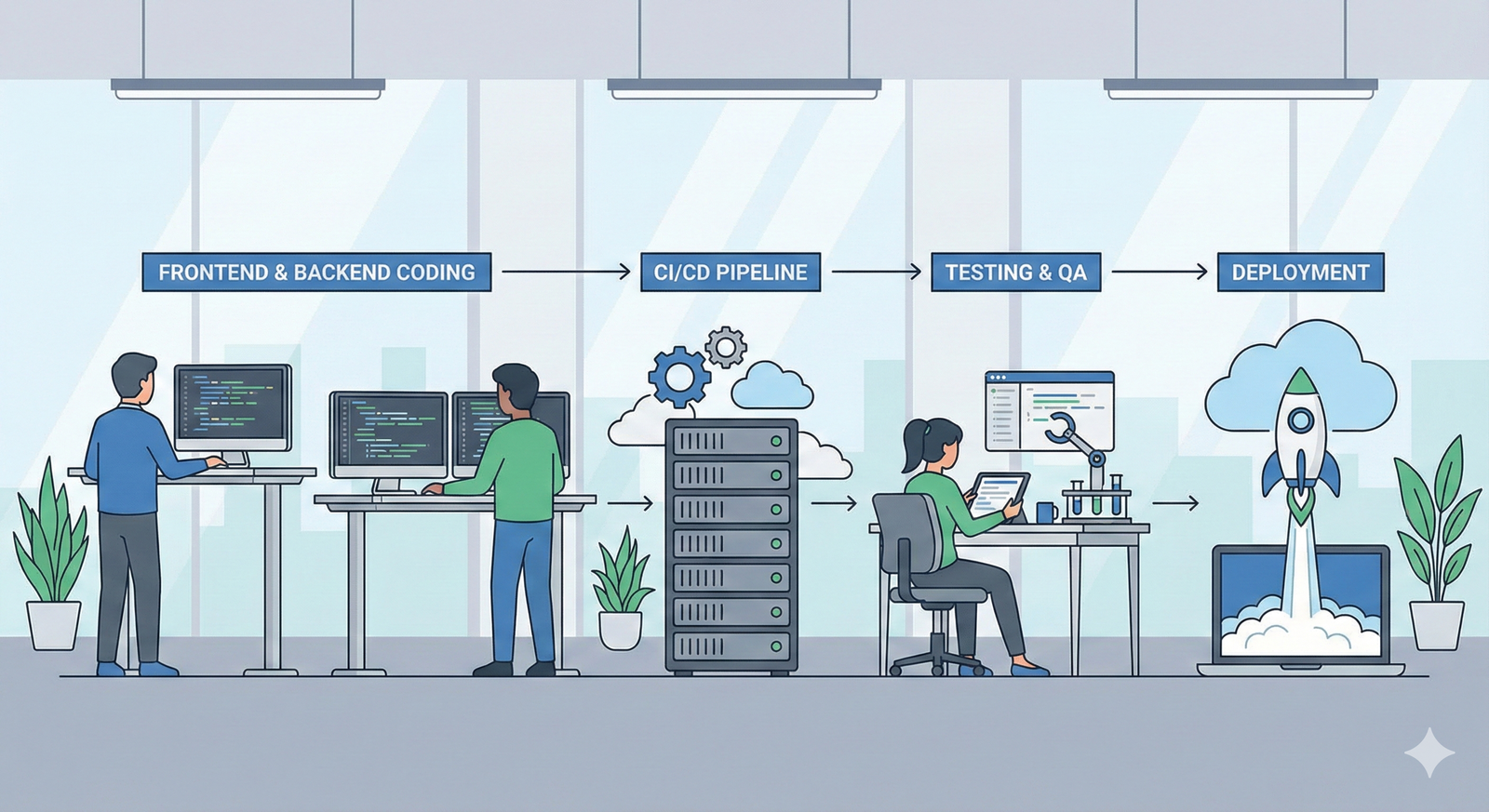
Follow agile methodologies with iterative sprints for continuous improvement. Implement automated testing, including unit tests, integration tests, and end-to-end tests, to ensure code quality. Set up Continuous Integration (CI) and Continuous Deployment (CD) pipelines to automate build, test, and deployment processes. Use logging, monitoring, and alerting tools to detect and resolve performance or reliability issues proactively. Automation reduces human error, speeds up release cycles, and ensures that your SaaS product remains stable and maintainable.
5. Security & Compliance
Security must be integrated from the start. Encrypt sensitive data in transit and at rest, implement secure authentication and authorization (OAuth2, JWT), and enforce role-based access controls. Regularly perform vulnerability scans, penetration tests, and code audits. Compliance with regulations like GDPR, HIPAA, or SOC 2 is mandatory in many industries. Adhering to security best practices protects user data, prevents breaches, and builds trust with clients.
6. Scaling & Infrastructure
Prepare your SaaS product to handle growth seamlessly. Utilize auto-scaling, load balancing, and container orchestration with Kubernetes or Docker Swarm. Optimize database performance and query efficiency. Implement caching strategies and CDN networks to reduce latency. Proactive monitoring, logging, and incident response are critical to maintain uptime and ensure consistent performance for users worldwide.
7. Analytics & User Feedback
Integrate analytics to monitor feature usage, user behavior, retention, and engagement metrics. Use these insights to prioritize feature development, optimize user experience, and reduce churn. Collect feedback directly from users via surveys, in-app prompts, and support channels. Combining quantitative analytics with qualitative feedback ensures the SaaS product evolves based on real user needs.
8. Marketing & Go-To-Market Strategy
Develop a comprehensive marketing strategy to reach your target audience. Define your unique value proposition clearly. Leverage content marketing, SEO, social media, paid ads, and influencer partnerships to increase visibility. Freemium models, trial periods, or limited-access beta programs encourage adoption and feedback. A strategic go-to-market plan ensures your SaaS product gains traction quickly and efficiently.
9. Continuous Improvement & Optimization
The SaaS lifecycle does not end at launch. Continuously improve your product by monitoring KPIs, optimizing features, fixing bugs, and implementing new functionalities. Stay updated with industry trends and emerging technologies. Iterative development and user-centric improvements maintain product relevance and competitiveness in a rapidly evolving market.
Focus Keyword: Building SaaS Products

Leave A Comment